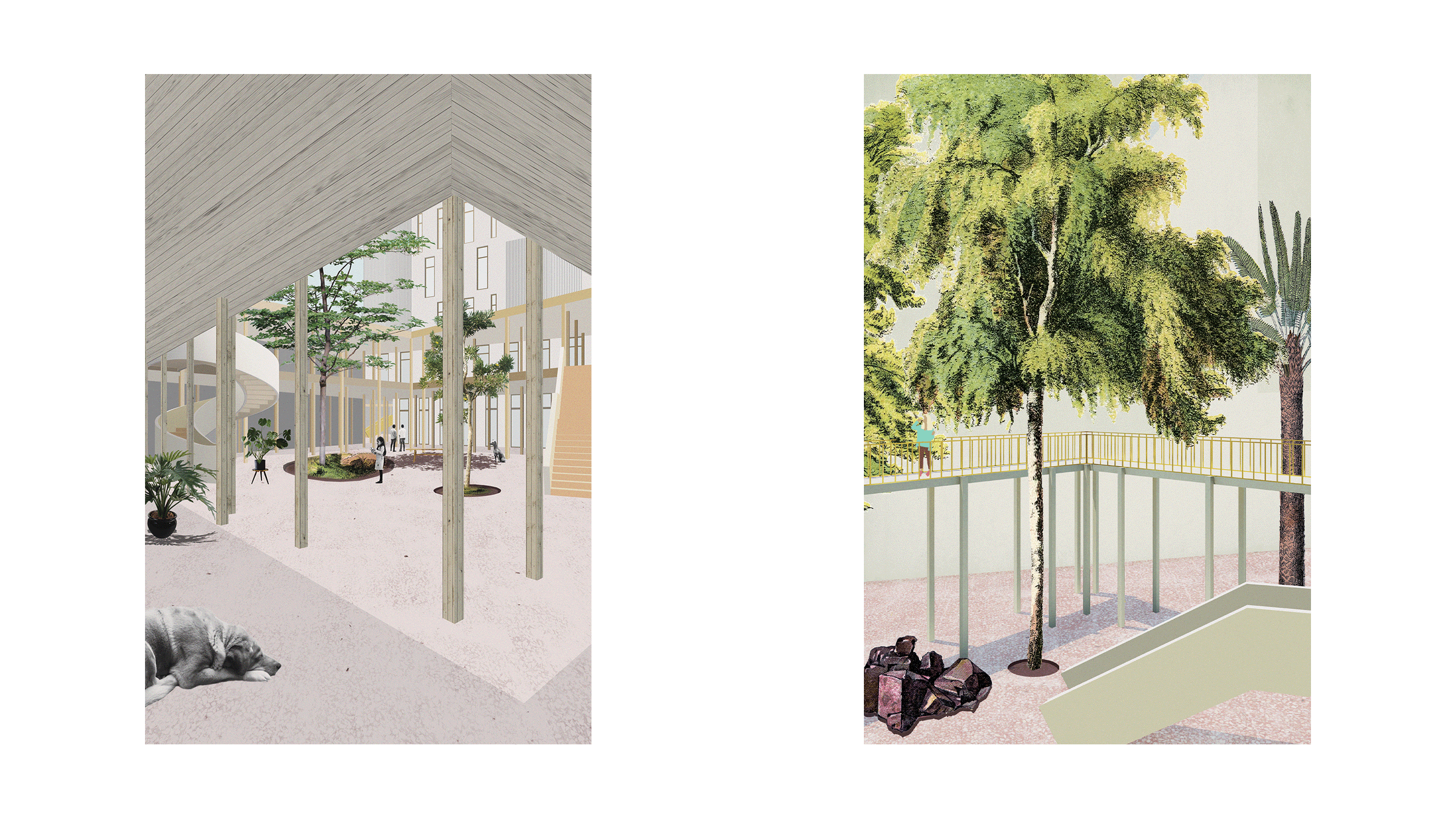
Chile’s vast timber resources offer both opportunity and caution. Decades of extractive forestry practices have produced landscapes marked by ecological depletion and social tension, while demand for sustainable construction continues to grow. In response, this housing proposal uses mass timber construction to link building production to responsible land management, positioning architecture as part of a broader environmental and social repair process.
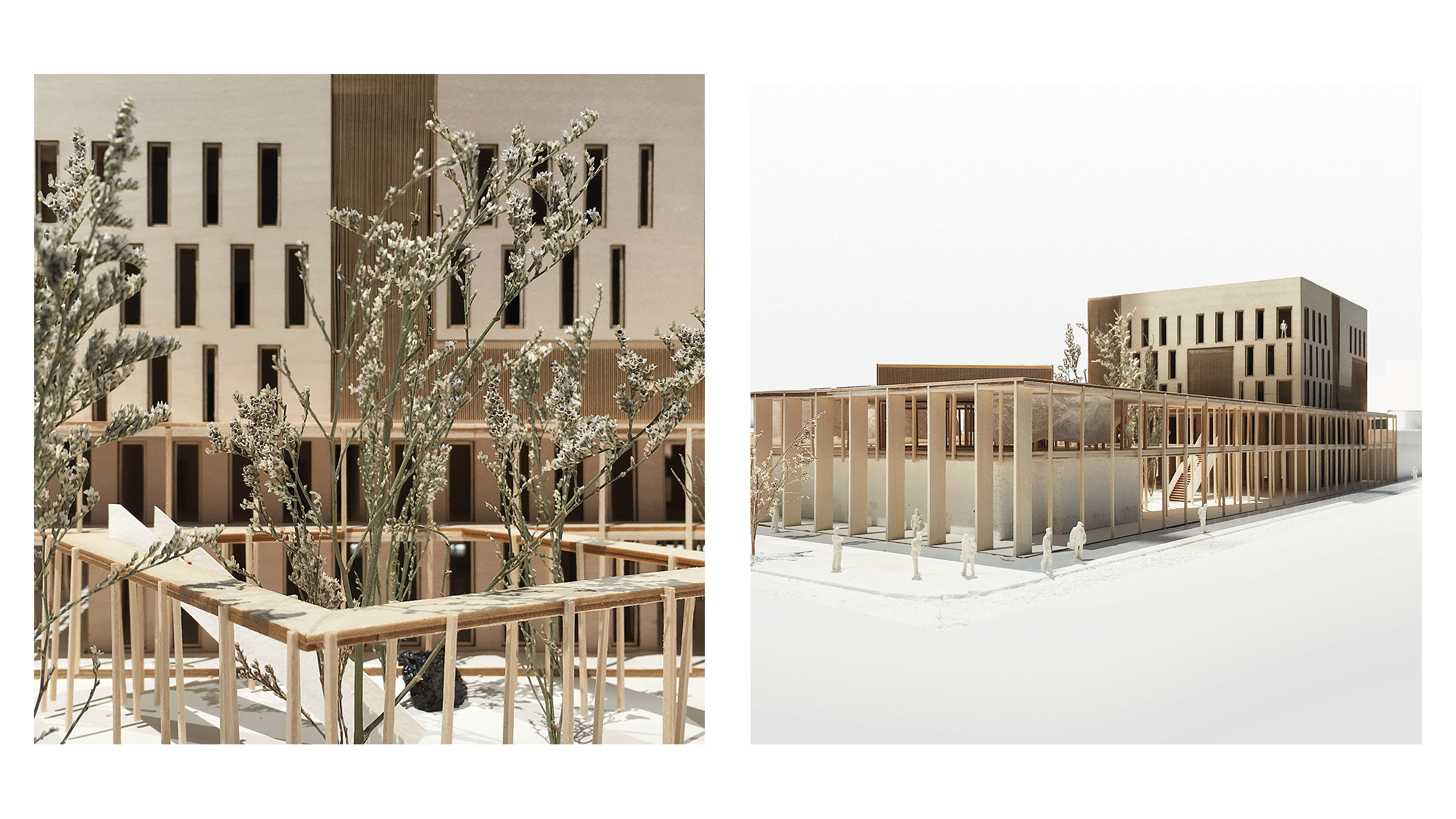
The building utilizes regionally sourced timber to produce mass timber building elements, such as cross-laminated and glue-laminated timber members, supporting healthier interior environments while reducing reliance on high-emission high-grade building materials. Rather than treating forests as purely extractive commodities, the project ties housing production to new forestry practices that prioritize soil restoration, rotational planting strategies, and biodiversity. In doing so, the project frames housing not simply as shelter, but as part of a regenerative cycle that connects rural land stewardship with urban development.
By integrating mass timber construction with long-term landscape and water management, the proposal challenges conventional plantation economies and offers a pathway toward more resilient ecosystems, more equitable economic models, and healthier buildings for communities across Chile.
Project Information
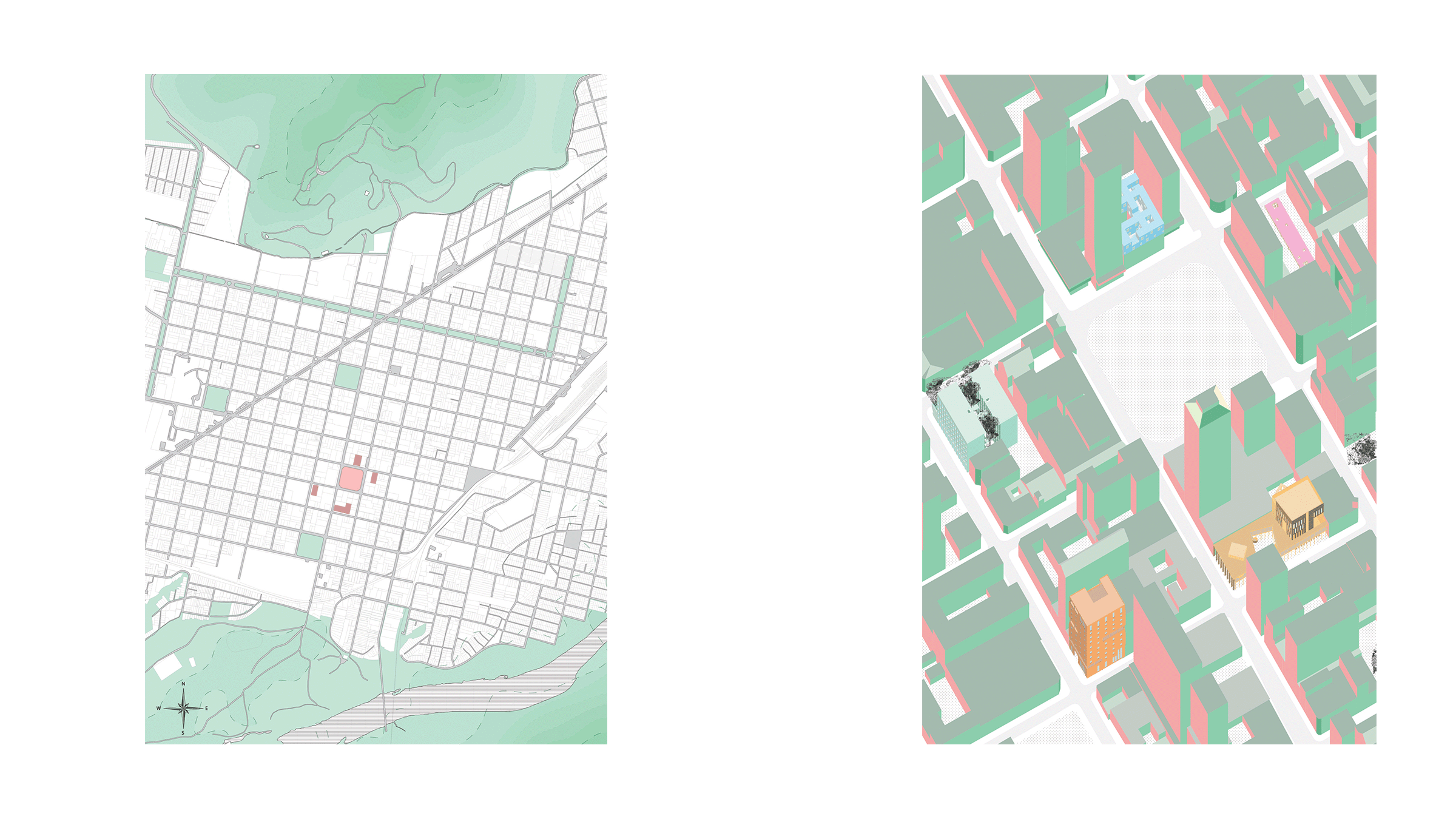
Location: Temuco, Chile, Araucanía Region IX
Project Team: in collaboration with Joshua Jow
Publications: Building Assemblies Published in Wood Urbanism, From the Molecular to the Territorial
Status: Conceptual Design